How to Choose the Best Grade1 and Grade2 Titanium Sheet?

Time:2026-05-05 Author:Charlotte
0%

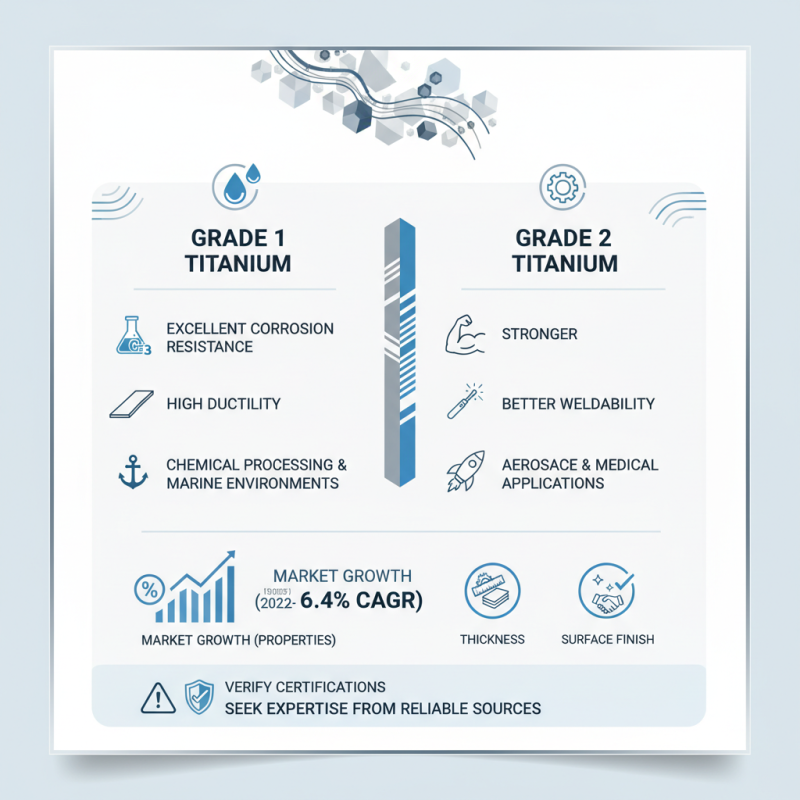
Choosing the best Grade1 & Grade2 Titanium Sheet requires understanding their unique properties and applications. Grade 1 titanium exhibits excellent corrosion resistance and high ductility, making it suitable for chemical processing and marine environments. In contrast, Grade 2 is stronger and offers better weldability, making it favored in aerospace and medical applications.

According to a recent report from Smithers Pira, the titanium market is expected to grow at a compound annual growth rate (CAGR) of 6.4% between 2022 and 2027. This growth highlights the increasing demand for Grade1 & Grade2 Titanium Sheet across various industries. Manufacturers should consider factors such as mechanical properties, thickness, and surface finish when making their selections.

Despite the advantages, choosing the right titanium sheet can be challenging. Not all suppliers adhere to strict quality standards, leading to variations in properties. It's essential to verify certifications and seek expertise from reliable sources to ensure the selected material meets specific requirements. Engaging with experienced professionals can prevent costly mistakes in the selection process.
How to Choose the Best Grade1 and Grade2 Titanium Sheet?

Understanding Grade 1 and Grade 2 Titanium Sheets: Key Differences

When selecting between Grade 1 and Grade 2 titanium sheets, understanding their key differences is crucial. Grade 1 titanium, known for its high corrosion resistance, is often chosen for applications in harsh environments. It features superior ductility and is very malleable, making it ideal for projects requiring complex shapes. However, this added flexibility can sometimes lead to challenges in machining, where maintaining precision may require extra care.

On the other hand, Grade 2 titanium offers a balance between strength and weight. It’s more durable than Grade 1, making it suitable for structural applications. This grade has better mechanical properties but is less ductile. While it can handle moderate stresses, it may be less forgiving in terms of shaping and forming. Buyers often grapple with the decision of which grade to use, as each has unique advantages and drawbacks depending on the project’s requirements.

Ultimately, the choice between Grade 1 and Grade 2 titanium sheets depends on the specific needs of your application. Consider factors such as environment, mechanical stress, and budget. Each option presents trade-offs that warrant careful evaluation. Making the right selection can significantly impact project success and overall performance.

How to Choose the Best Grade 1 and Grade 2 Titanium Sheet? - Understanding Grade 1 and Grade 2 Titanium Sheets: Key Differences

Property Grade 1 Titanium Grade 2 Titanium
Chemical Composition Pure Titanium (99.5% min) Pure Titanium (99.2% min) + Iron (0.1% max)
Yield Strength 240 MPa 275 MPa
Tensile Strength 350 MPa 380 MPa
Elongation 24% 20%
Corrosion Resistance Excellent Very Good
Applications Medical Devices, Aerospace Marine, Chemical Processing

Applications of Grade 1 and Grade 2 Titanium Sheets in Industries

Titanium sheets of Grade 1 and Grade 2 have diverse applications across various industries. Grade 1 titanium, known for its excellent corrosion resistance, is often used in chemical processing and marine environments. The purity level of Grade 1 makes it ideal for applications requiring minimal impurities. On the other hand, Grade 2 titanium, which is slightly stronger, finds its place in aerospace and automotive sectors. Its balance of strength and weight is crucial for these demanding applications.

Tips: When selecting titanium sheets, consider the specific needs of your project. Think about the environment where the material will be used. Grade 1 is perfect for harsh conditions. However, if strength is a priority, Grade 2 could be the better choice. Always check the specifications before making a decision.

Many industries, such as medical, also benefit from titanium sheets. Medical implants and devices often utilize Grade 2 due to its biocompatibility. In contrast, Grade 1's non-toxic properties are advantageous in food processing applications. However, selecting the right grade can be challenging. It's essential to weigh the benefits against the expected performance. A thorough understanding of each grade's characteristics will guide your choice.

Factors to Consider When Selecting Titanium Sheets

When selecting Grade 1 and Grade 2 titanium sheets, several key factors come into play. The purity of the titanium is crucial. Grade 1 is the most commercially pure form, while Grade 2 has a bit more strength. The choice often depends on the specific application. For lightweight structures, Grade 1 is ideal. For applications needing added strength, Grade 2 is preferable.

Thickness and dimensions should also be considered. A thicker sheet may provide better durability but can be more challenging to work with. The surface finish of the sheets matters too. A smooth finish can enhance corrosion resistance. Conversely, a rough finish might make welding easier in some cases. It’s vital to reflect on how these factors align with your project requirements.

Lastly, sourcing from reliable suppliers cannot be overstated. The credibility of a supplier ensures quality. Not all suppliers have the same quality control standards. Always verify certifications and capabilities before making a decision. The ideal choice of titanium sheets needs careful thought, balancing costs, strength, and application suitability.

Quality Standards and Certifications for Titanium Sheets

Choosing the right titanium sheet requires understanding its quality standards and certifications. Titanium sheets are graded, with Grade 1 and Grade 2 being the most sought after. Grade 1 offers excellent corrosion resistance, while Grade 2 provides better strength. Both grades must meet specific standards set by organizations like ASTM and ISO.

Quality certificates are essential. They ensure the material meets mechanical and chemical properties. Industry reports show that compliance with ASTM B265 is crucial. This standard outlines the specifications for titanium sheets used in various applications. Additionally, ISO 9001 certification indicates a factory's consistent quality management. Buyers should look for suppliers with these certifications to ensure reliability.

Tips: Always request documentation. Certification can differentiate suppliers. Verify mechanical properties such as yield strength and elongation percentages. This not only ensures quality but also influences the sheet's end-use. Regular audits of suppliers help maintain quality control over time.

Quality Comparison of Grade 1 and Grade 2 Titanium Sheets

Cost Considerations for Grade 1 and Grade 2 Titanium Sheets

When selecting Grade 1 and Grade 2 titanium sheets, cost considerations play a vital role. Grade 1 titanium is known for its excellent corrosion resistance and ductility. It tends to be less expensive than Grade 2 due to the lower strength requirements. On average, the price difference can be noticeable, particularly for larger orders. However, the savings may not be worth it if the application demands higher strength.

Grade 2 titanium offers better strength properties, making it suitable for more demanding environments. Investing in Grade 2 may save costs in the long run, particularly in high-stress scenarios. Procurement decisions should reflect long-term project goals. A detailed cost analysis is often necessary. Warranties and supplier reliability can also affect overall expenses.

Buyers often overlook hidden costs such as processing or delivery charges. These can impact the total purchase price significantly. Making a choice requires careful budgeting and consideration of project demands. It’s essential to evaluate whether the initial savings will lead to additional costs later on. A balanced approach can lead to better decision-making.

FAQS

: What is the main difference between Grade 1 and Grade 2 titanium sheets?

: Grade 1 has high corrosion resistance, while Grade 2 offers better strength for structural needs.

Why is ductility important in Grade 1 titanium sheets?

Ductility allows for complex shapes, but it can complicate machining and precision.

What advantages does Grade 2 titanium provide?

Grade 2 is more durable and has superior mechanical properties compared to Grade 1.

What factors should I consider when choosing titanium sheets?

Consider environment, mechanical stress, and budget to determine the right grade for your project.

Are quality certifications important for titanium sheets?

Yes, certifications ensure materials meet mechanical and chemical standards, enhancing reliability.

What standards should be checked for titanium sheets?

ASTM B265 for specifications and ISO 9001 for quality management are key standards to verify.

How can I ensure a supplier's reliability?

Request documentation and certification to confirm compliance with quality standards before purchasing.

What challenges might arise when using Grade 1 titanium?

While flexible, it may pose challenges in achieving precision during shaping and machining processes.

How does Grade 2's mechanical properties affect its use?

Grade 2 can handle moderate stresses, but it may be less forgiving in shaping and forming.

What should I do if I'm uncertain about which titanium grade to choose?

Evaluate project needs and consult with industry experts for guidance on material selection.

Conclusion

When it comes to selecting the best Grade 1 and Grade 2 Titanium Sheets, understanding their key differences is essential. Grade 1 Titanium is known for its excellent corrosion resistance and ductility, making it ideal for applications in the chemical processing and marine environments. In contrast, Grade 2 offers a balance of strength and formability, making it suitable for a wider range of industrial applications, including aerospace and automotive sectors.

Several factors must be considered when choosing between Grade 1 and Grade 2 Titanium Sheets, including the specific application requirements, mechanical properties, and environmental conditions. Moreover, understanding the quality standards and certifications that govern titanium sheets is crucial to ensure reliability and safety. Lastly, cost considerations play a significant role, as Grade 1 sheets may be more expensive due to their superior properties. By carefully evaluating these aspects, one can make an informed decision when selecting Grade 1 & Grade 2 Titanium Sheet for their specific needs.


Charlotte

Charlotte

Charlotte is a seasoned marketing professional with a deep understanding of the company's portfolio and a passion for elevating its presence in the market. With a keen eye for detail and a commitment to excellence, she ensures that our professional blog is regularly updated with insightful articles......